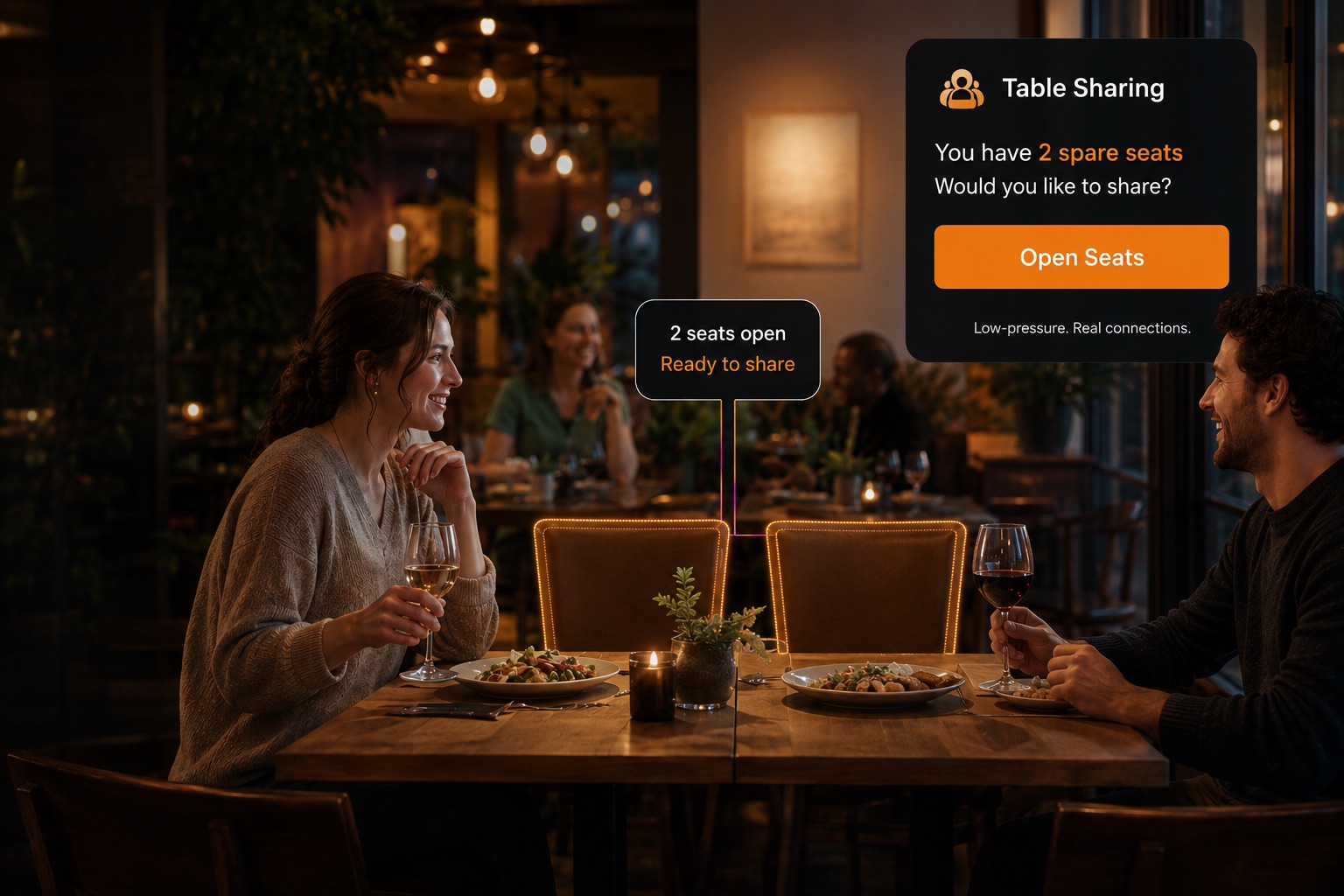
Table Sharing transforms unused seats into new opportunities. When a guest is sitting alone at a four-person table, they can choose to make their empty seats available to other diners in the restaurant. This helps restaurants increase occupancy and revenue while giving adults a simple, low-pressure way to meet new people over a shared meal—turning empty chairs into meaningful connections.
What table sharing is
A guest who has already ordered can open their table to others by offering anywhere from one to eight available seats and adding a short note to set the tone. Whether it's "Solo traveler, happy to chat," "Watching the match, join us," or "Open to meeting new people," the note helps nearby diners decide if they'd like to join, making introductions feel natural and effortless.
Other guests see a live map of the restaurant showing free tables, tables open for sharing, and fully occupied tables. They can tap any shared table to read the host's note, see how many seats are available, and simply walk over to join. There are no profiles, chats, or swiping—connections happen naturally, face to face, around a table, just as they always have.
The live table map, as a guest sees it
"Watching the match, join us"
For adults, making friends is genuinely hard
As we get older, the places where friendships once formed naturally begin to disappear—school, university, the dorm, even your first job. What's left are dating apps, networking events, and social platforms that often make meeting people feel like work. Yet one thing hasn't changed: people still go out to eat every day. Table Sharing simply brings social connection back to a place where it can happen naturally—around a shared meal.
Table Sharing brings people together using one of humanity's oldest social traditions: sharing a meal. It removes the biggest source of uncertainty—not knowing who is actually open to company. A short note sets expectations, the available seat count confirms there's room, and the invitation is visible to everyone on the restaurant map. Whether you're a solo traveler, an expat, new in town, or simply someone who prefers not to eat alone, finding a welcoming table becomes simple, natural, and effortless.
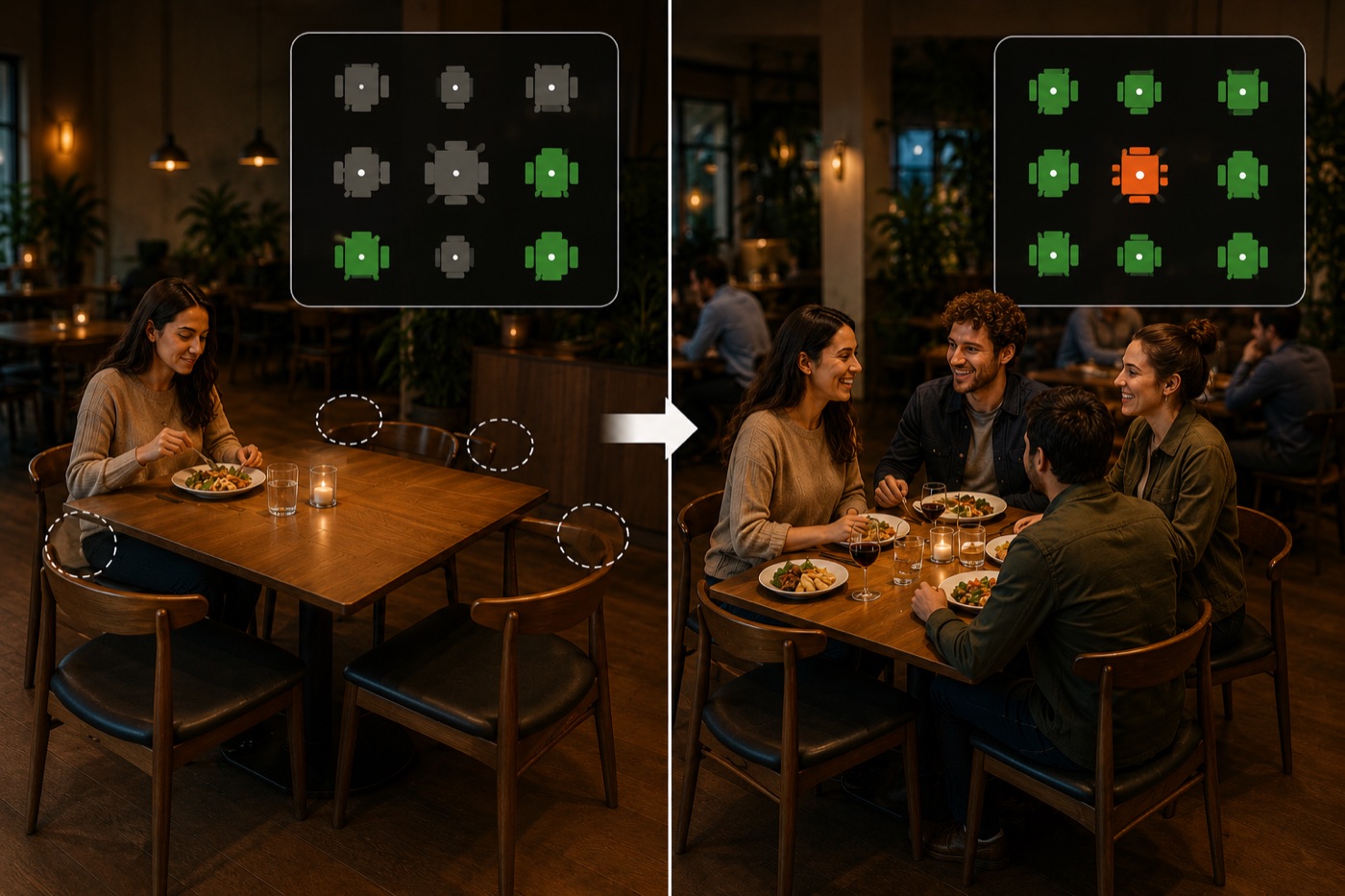
What the restaurant gets out of it
Built to stay safe and real
The map only unlocks at the venue. You have to be physically at the restaurant to see or join tables — no browsing from home, no spam, no strangers who aren't already in the room.
No identity is ever shown. Other diners see only the table, its open seats and the note — never a name, photo or profile. You meet a person, not a listing.
Opt-in, both ways, cancel anytime. Nothing happens unless a host opens their table, and they can stop sharing with one tap. Joining means walking over and saying hello — the human veto is built in.