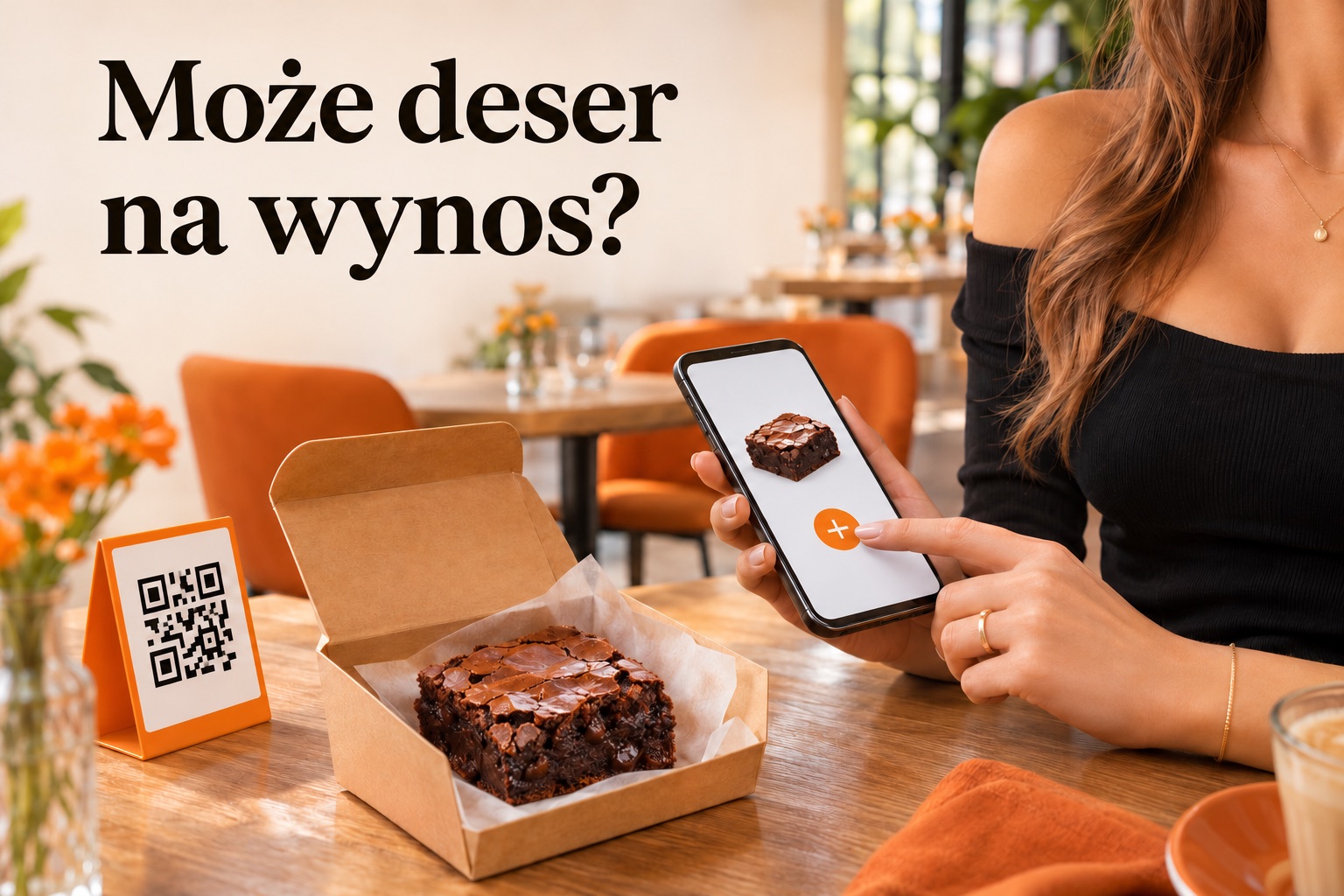
A guest finishes their meal, asks for the bill and skips dessert. It is easy to assume they did not want one. They may simply not want to keep sitting at the table. A cookie they can take home and eat later is a different offer from a dessert served right after the meal.
This is an opportunity worth checking, but not a reason to build a new menu section straight away. A better start is one takeaway item, available for a set period. Such a test will show whether guests choose it and whether sales cover the extra work and costs.
Why test a takeaway dessert?
In November 2026, “Nation’s Restaurant News” described examples of restaurants that offer a dessert to take away after the meal or show it as an add-on when ordering online. The pastry chef at Daisies, a Chicago restaurant, says there that the best desserts for takeaway are those that can be served at room temperature and contain no ice cream. Lazy Dog Restaurants, a restaurant chain, recommends its banana pudding as a suggested add-on when guests finalise an online order.
The data also suggest that add-ons are worth a look, although they do not say what result any particular restaurant will get. According to the National Restaurant Association’s 2025 report, eight in ten surveyed US consumers who eat off-premises said they would take a discounted add-on, such as a drink or dessert, when buying a main dish at regular price. That is a statement by American consumers about a discounted add-on, not a forecast of dessert sales in a Polish restaurant. Your own test will give an answer closer to your guests.
Choose a dessert that travels well
For the trial, pick an item your kitchen can prepare consistently and hand over quickly. A brownie, a cookie or a dessert in a sealed jar is easier to transport than a portion of ice cream with warm sauce. The dessert should look and taste good even when the guest opens the packaging after several dozen minutes.
Before you start, pack a portion the way the customer will receive it and take it for a walk or home. Check that nothing leaks, goes soggy or needs extra instructions. This is a simple quality threshold: even a dessert that guests happily buy does not belong in the permanent offer if it arrives in poor condition.
Also set one price and one standard portion size. If the flavour, packaging or price changes every day, the result will be harder to interpret.
Show the offer at the moment of decision
Adding the dessert at the end of a long menu may not be enough. The author of the “Nation’s Restaurant News” article notes that a guest placing an online order sometimes does not scroll down to the dessert section. That is why it is worth showing one short offer where the guest chooses dishes or finishes the order.
A sample message could read: “Brownie for later — we’ll pack it to go.” The guest knows right away what they are buying and when they can eat it. Floor staff can use the same sentence when they ask about dessert. If the restaurant uses a menu and ordering by QR code at the table, the offer should be just as easy to find on a phone.
For the duration of the trial, stick to one way of presenting it. If staff recommend the dessert to everyone one day and nobody mentions it the next, the result will depend on the team’s work as well as on the product itself.
Run a short test and count the full result
Set the trial period in advance, for example two weeks, so that it covers both weekdays and weekends. Record the number of orders to which a dessert could have been added and the number of portions sold. Divide the second number by the first and you get the share of orders with the test dessert. Compare similar days and times: a Saturday evening and a quiet Tuesday lunch can give different results.
Also check whether the new item increased total dessert sales or mainly replaced those that guests bought before. Data from a comparable period before the test will help. Alongside sales, note returns, comments about the packaging, unsold portions and the time needed for preparation.
Let us assume, purely for the sake of an example, that with 120 orders you sell 18 takeaway brownies. That is 15% of orders with the add-on. If a portion costs PLN 16, and the ingredients, packaging and extra labour together cost PLN 9, each portion sold leaves PLN 7 to cover other costs and profit. Eighteen portions give PLN 126, but if the unsold desserts cost PLN 40, PLN 86 is left. This is an illustrative calculation, not a research result or a promise to any restaurant. It does show, however, why the number of orders alone is not enough.
What to do after the test
If the dessert sells regularly, travels well and gives a sensible result after costs, you can extend the trial or add it to the menu. If interest is low, first check whether guests saw the offer at all. Weak sales of an item hidden in the menu do not settle whether the dessert itself was a miss.
Sometimes the result will point to a change smaller than expanding the offer: better packaging, a shorter description or a different place to show it. Change one thing at a time and test it again. That way you will know what helped.
A takeaway dessert can be a convenient add-on to a meal, but the best answer to the question about demand comes from your guests’ orders. Start with one item, count its result and only then decide whether to give it a permanent place on the menu.
Do you run a restaurant and want to see how to present additional items when ordering by QR code at the table? Contact ForkTable and book a free pilot.