After the celebration, the question of daily practice remains
World Food Day 2026 is behind us. On 16 October the FAO marked it under the theme “Innovate today. Nourish tomorrow”. At the main ceremony at FAO headquarters in Rome, the talk was of solutions that are meant to reach people and work in practice. The FAO report shows that this is about technology as much as about the knowledge of people who work with food every day.
In Poland, on 15 October representatives of institutions and the industry met in Warsaw at the headquarters of the Agricultural and Food Quality Inspection (IJHARS). Among the challenges discussed were food loss and waste. For restaurants, this is a good moment to ask a simple question once the celebration is over: what happens to an ingredient that did not make it onto a plate today?
The scale of the problem justifies the conversation. According to Eurostat, the European Union generated 57.9 million tonnes of food waste in 2024. Restaurants and other food service businesses accounted for 12% of that, or about 15 kg per inhabitant. The data covers edible and inedible parts, and for some countries it is an estimate; it is not a measure of the losses of a single venue. You need to collect your own numbers in the kitchen.
First, check where the surplus comes from
For a few days, write down what is left after service and why. Separate products you could not use before their use-by date, surplus created during preparation, and food coming back on guests' plates. These are different problems. If the same side dish is left over regularly, look at the portion size. If a finished dish is left at the end of a shift, check the size of the batches you prepare.
The US Environmental Protection Agency (EPA) advises food service businesses to measure the amount and type of waste, compare purchases with guests' orders, and adjust menus and portions. To start, a sheet of paper at the station and a short team conversation after service are enough. The number of reservations in ForkTable can be extra information when planning the day. A reservation will not tell you what guests will order, though, so it does not replace observing sales and losses.
Not every surplus is waste. A full-value, properly stored product can go into another dish, if food safety rules allow it. Food from guests' plates does not go back into circulation. The team should know when an ingredient is fit for use or for passing on, and when it has to be withdrawn.
Describe the ingredient, the dish and the action
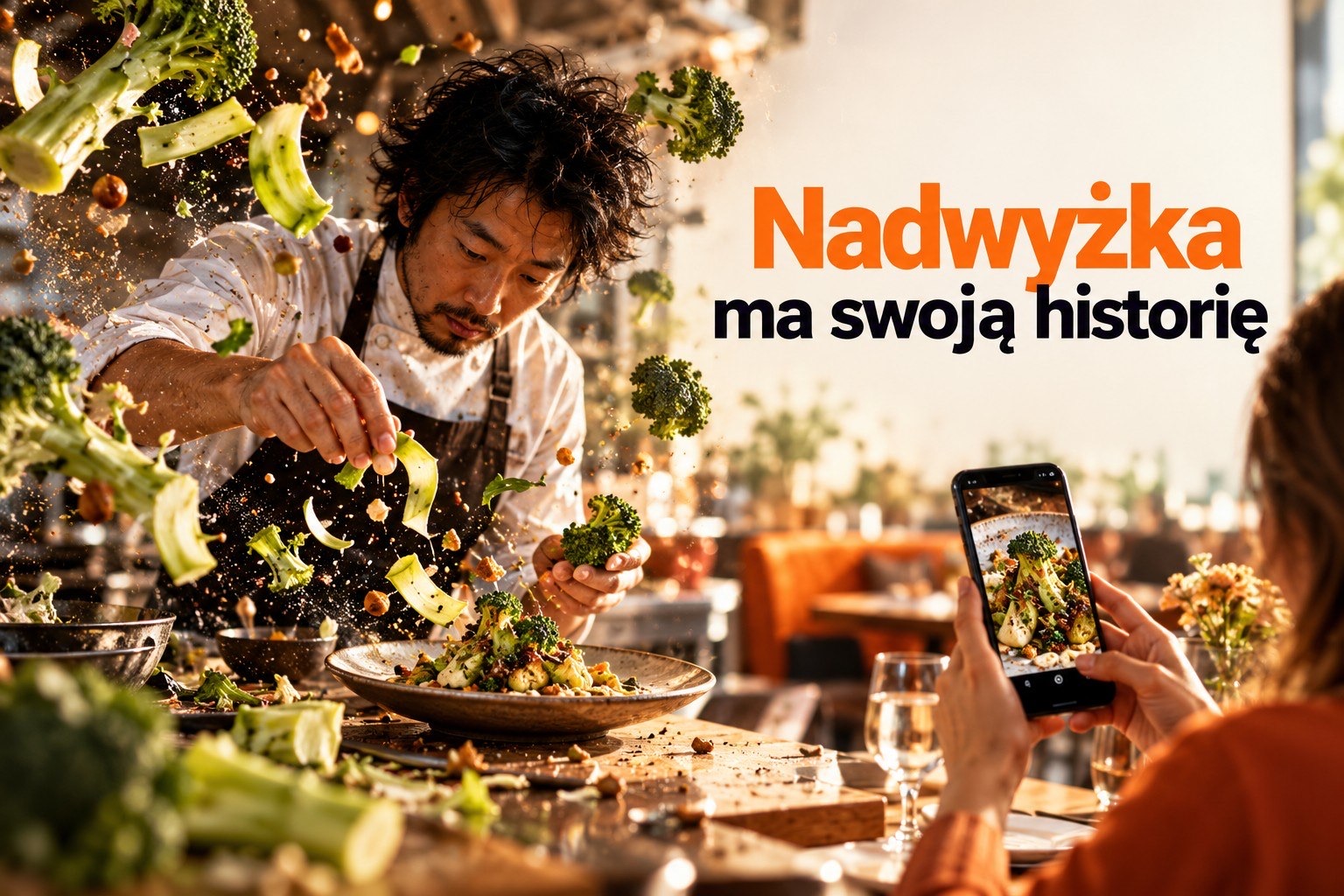
Choose one practice that a guest can see in the menu. If the kitchen uses broccoli stalks in a cream soup, the description could read: “We make the soup with the stalks as well, so we use the whole vegetable”. If stale bread becomes croutons, say so next to the soup. The EPA gives using stale bread and vegetable trimmings as examples of reducing losses.
The description should answer three questions: what the ingredient is, what is made from it, and why you use it. There is no need to call a dish “zero waste” if the restaurant cannot justify such a broad claim. Above all, the guest wants to know what they are ordering. The story of an ingredient can help them choose a dish, but it should not overshadow its taste and composition.
This is where the ForkTable menu opened with a QR code comes in handy. You can place the dish description exactly where the guest decides what to order. When the kitchen prepares a dish from the ingredients it has available, it can add it to the digital menu without reprinting paper menus. If the portions run out, staff switch the dish off in the panel and the guest sees that it is unavailable. The description and availability can therefore be matched to what is really happening in the kitchen.
ForkTable also offers the menu in the guest's language and ordering from the phone at the table. It is worth making sure that the short description of how an ingredient is used is clear after translation too. The QR code makes it easier to show the current offer and a specific kitchen decision at the moment the guest chooses a dish. The waiter can tell the same story in their own words.
Show what happens after the kitchen closes
Some surplus cannot be used in the next service. In that case it is worth establishing whether unsold food can be passed on in line with safety rules. An example is the Chick-fil-A Shared Table programme: participating restaurants pack unused food, and local community organisations collect it and prepare meals from it. The company says that more than 2,700 restaurants take part in the programme.
You do not have to copy the scale of a chain. If a venue works with an organisation, it can tell guests what it passes on, to whom and how often. If it is still looking for a partner, it should not write that it “saves meals”. An honest message describes an action that already exists. This information can go next to the dish description or in a short note in the venue, but it has to be up to date.
The same goes for selling surplus at the end of the day. In the Too Good To Go model, a venue lists a bag of unsold food, and the customer reserves it and collects it at a set time. It is a solution for ready-made products left after service. It is important to describe clearly what is in the bag and how collection works. If a restaurant uses several sales channels, the team must keep track of actual product availability.
Don't stop at a single holiday
This year's FAO theme can be turned into a small, verifiable experiment: choose one ingredient, plan how to use it and describe the finished dish in the menu. After a week, go back to your service records. Is there less product left after closing? Do guests order the new dish? Do they still leave the same side dish? The answers will help you decide what to keep on the menu.
Reservations help you prepare for guests' visit, a QR menu updated on the go shows them the real offer, and ordering and payment at the table close the same path on the phone. You still have to measure the amount of waste in the kitchen. ForkTable's features give a restaurant a simple way to show guests the kitchen's daily decision at the right moment.
If you run a restaurant and want to see how to present such dishes to guests at the table, get in touch with ForkTable. Let's talk about a free pilot of ordering and payment via QR at your venue.